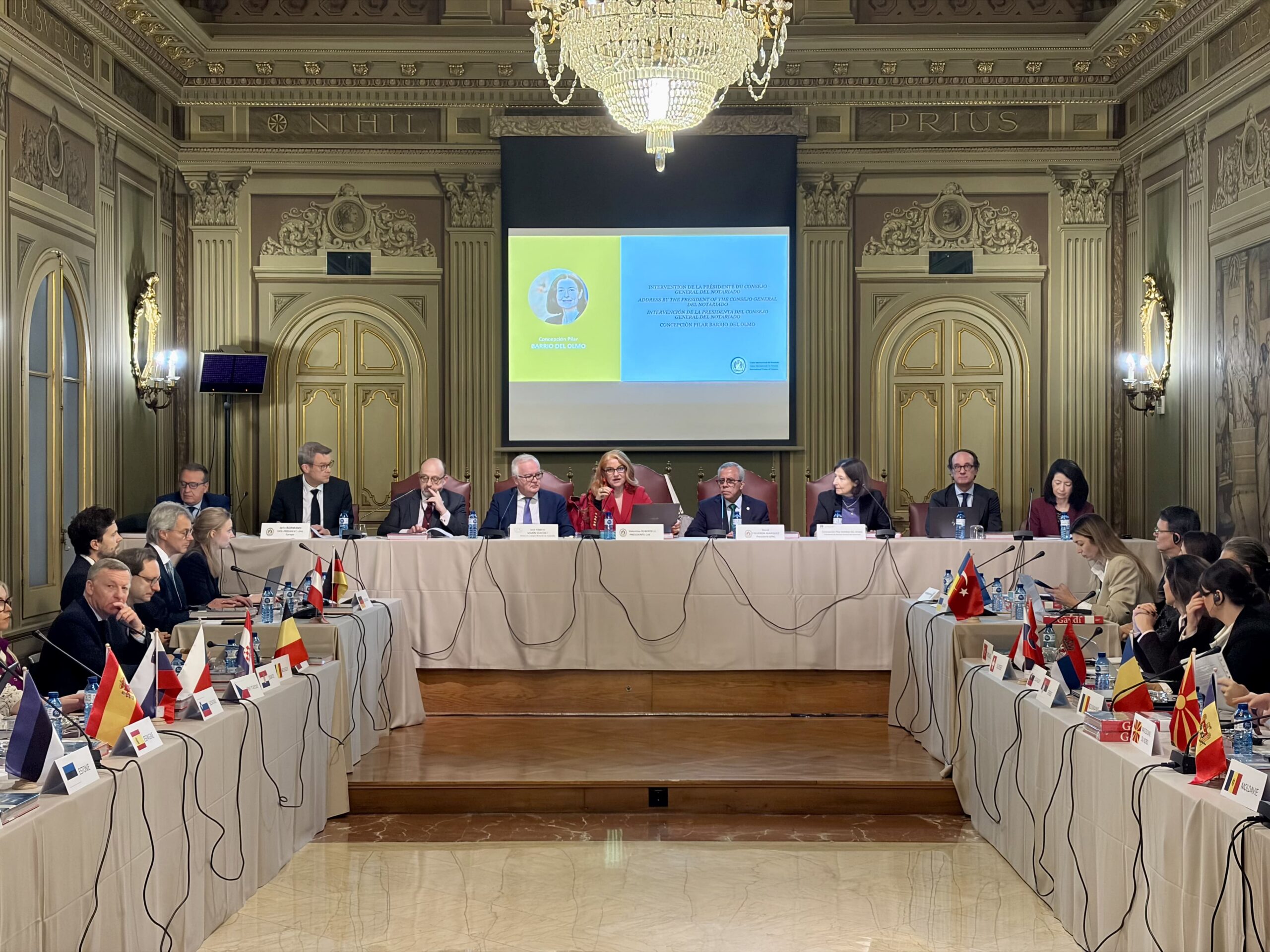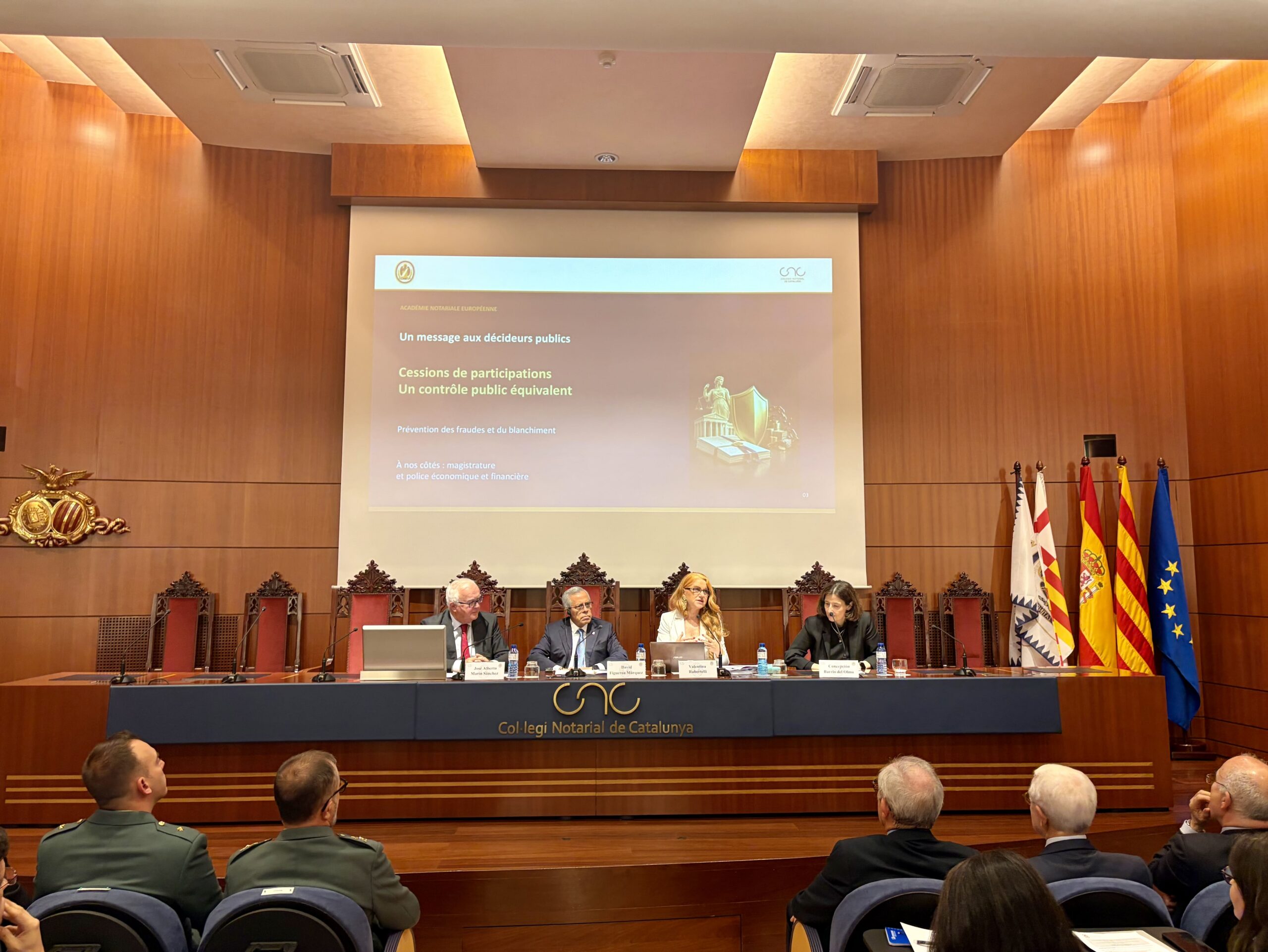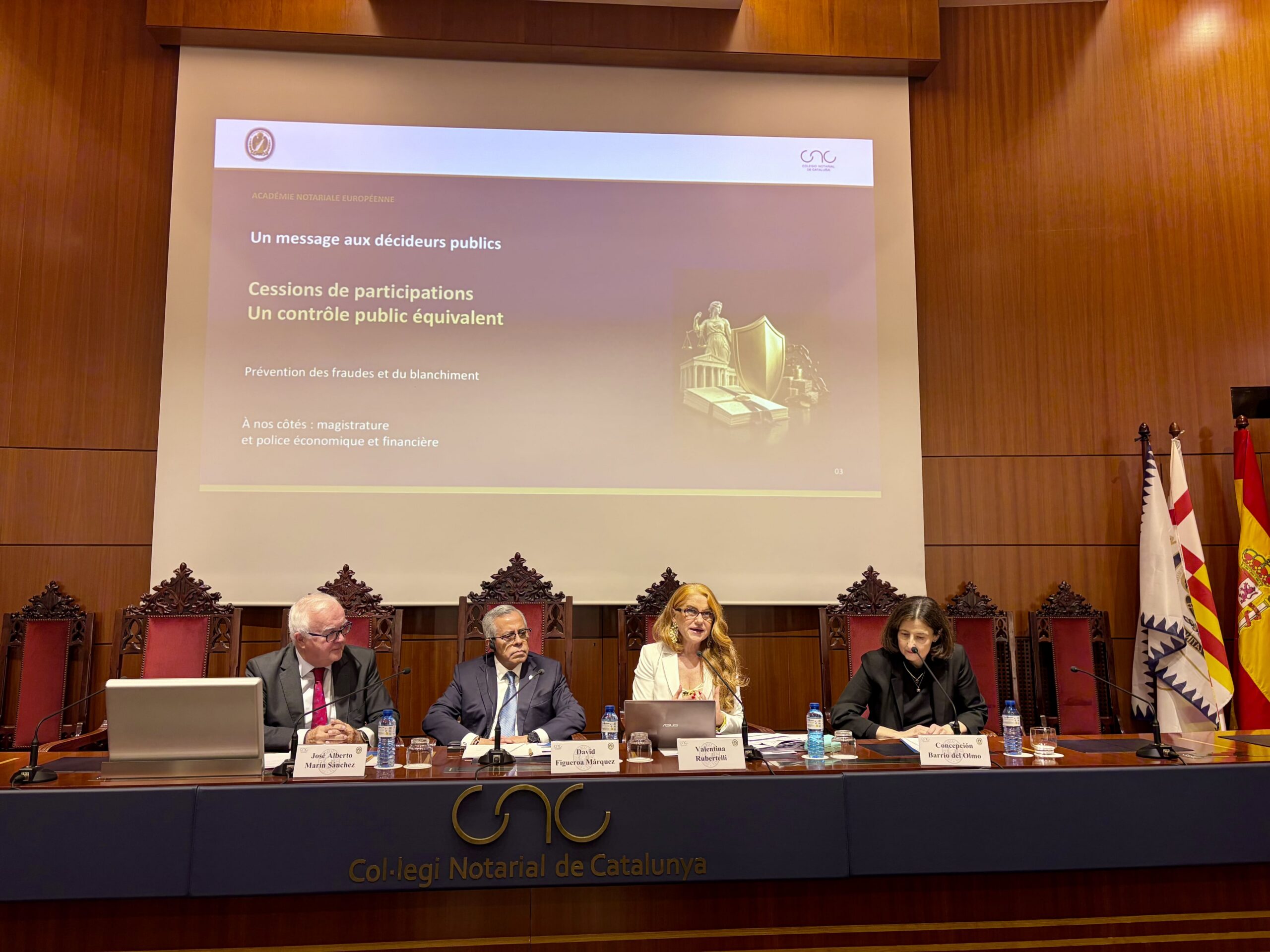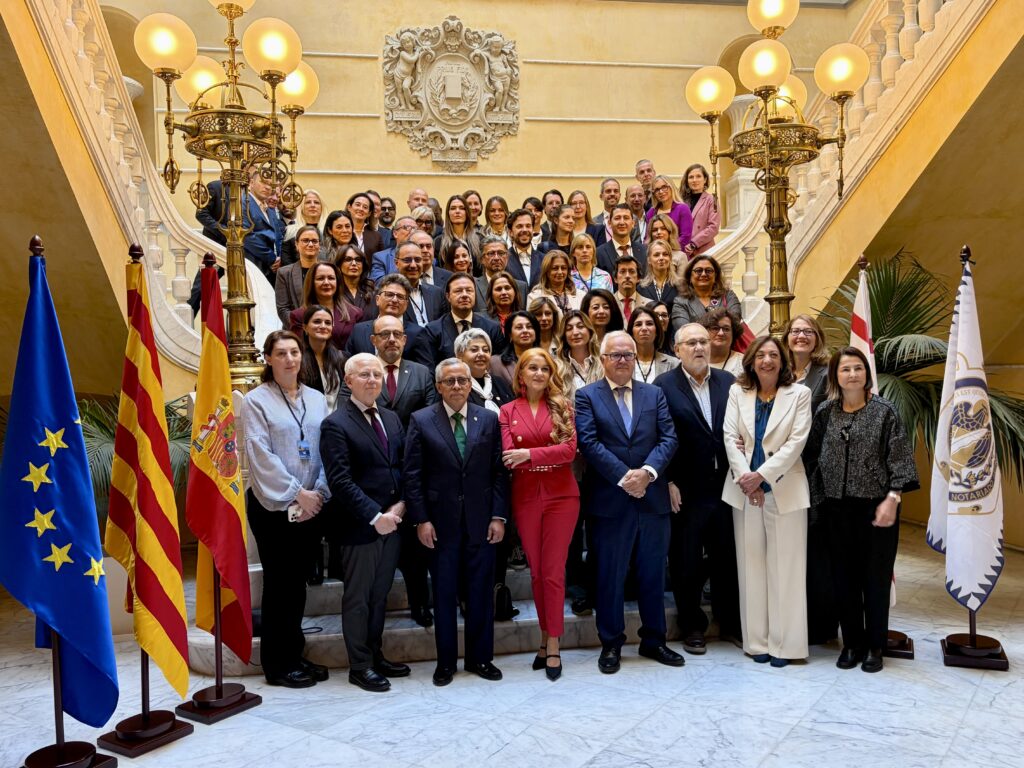
On 5 and 6 November 2026, the European Affairs Commission (CAE), chaired by Italian notary Valentina Rubertelli, held its 2nd plenary session of the 2026-2028 legislature at the headquarters of the Colegio Notarial de Cataluña in Barcelona.
The CAE was honoured by the presence of the UINL President, David Figueroa Márquez, and of the President of the Consejo General del Notariado, Concepción Pilar Barrio del Olmo.
A European Notarial Academy on “The fight against organised crime”
The session of the European Notarial Academy was one of the highlights of the meeting. It brought together the perspectives of judges, law enforcement and notaries on a challenge that knows no borders.
Opening presentation:
Pedro Rincón de Gregorio, notary in Esplugues de Llobregat and Spanish delegate to the CAE, presented the Spanish system, and in particular the Órgano Centralizado de Prevención (OCP, Centralised Prevention Body), as a possible European model.
The judges’ perspective:
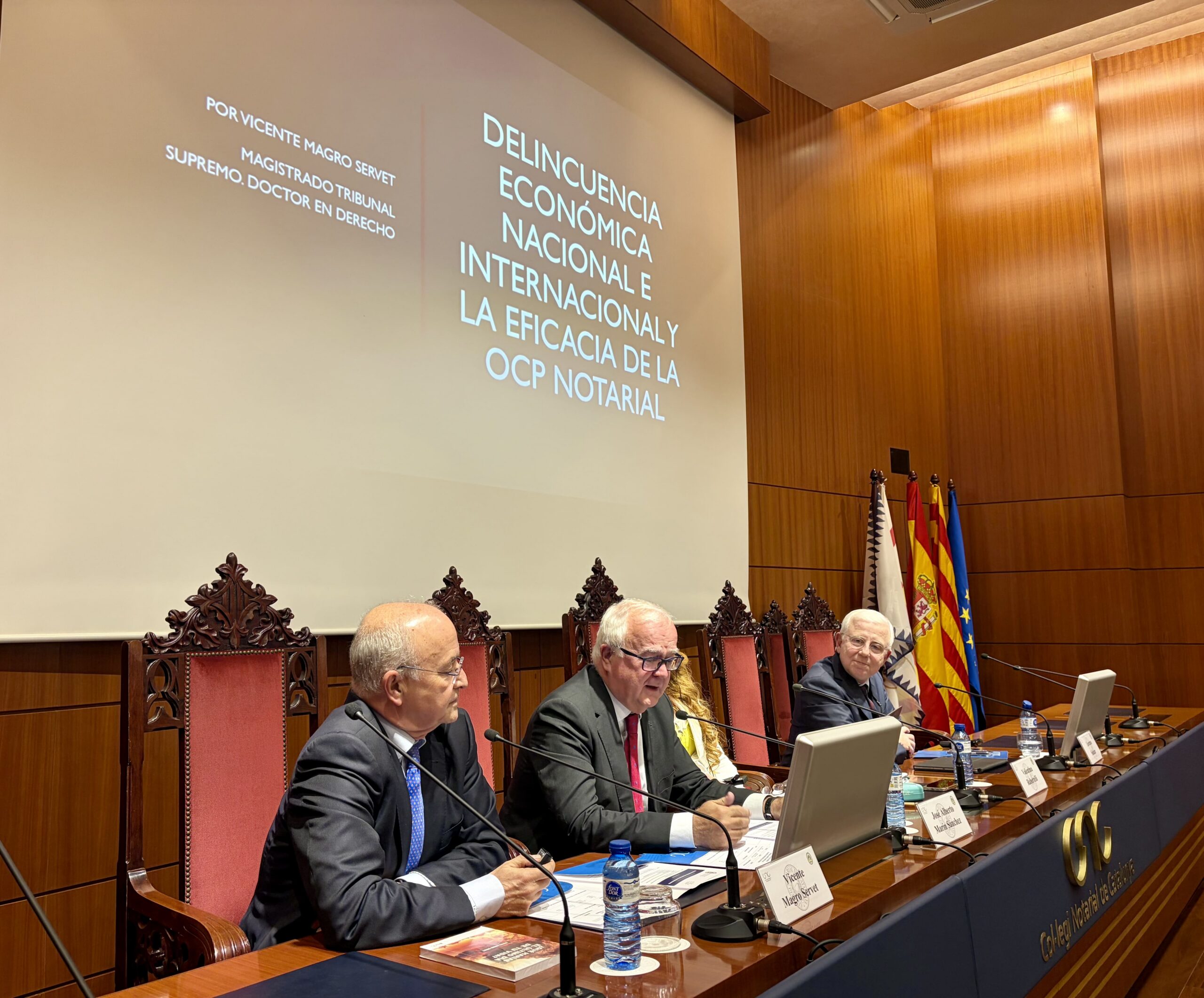
Lorenzo Salazar, judge and Chair of the European Committee on Crime Problems (CDPC) of the Council of Europe, and Vicente Magro Servet, judge of the Criminal Chamber (Sala Segunda) of the Spanish Supreme Court, spoke on evidence, tracing the money, identifying the beneficial owner, the evidential value of the notarial instrument and the usefulness of notarial databases in criminal proceedings.
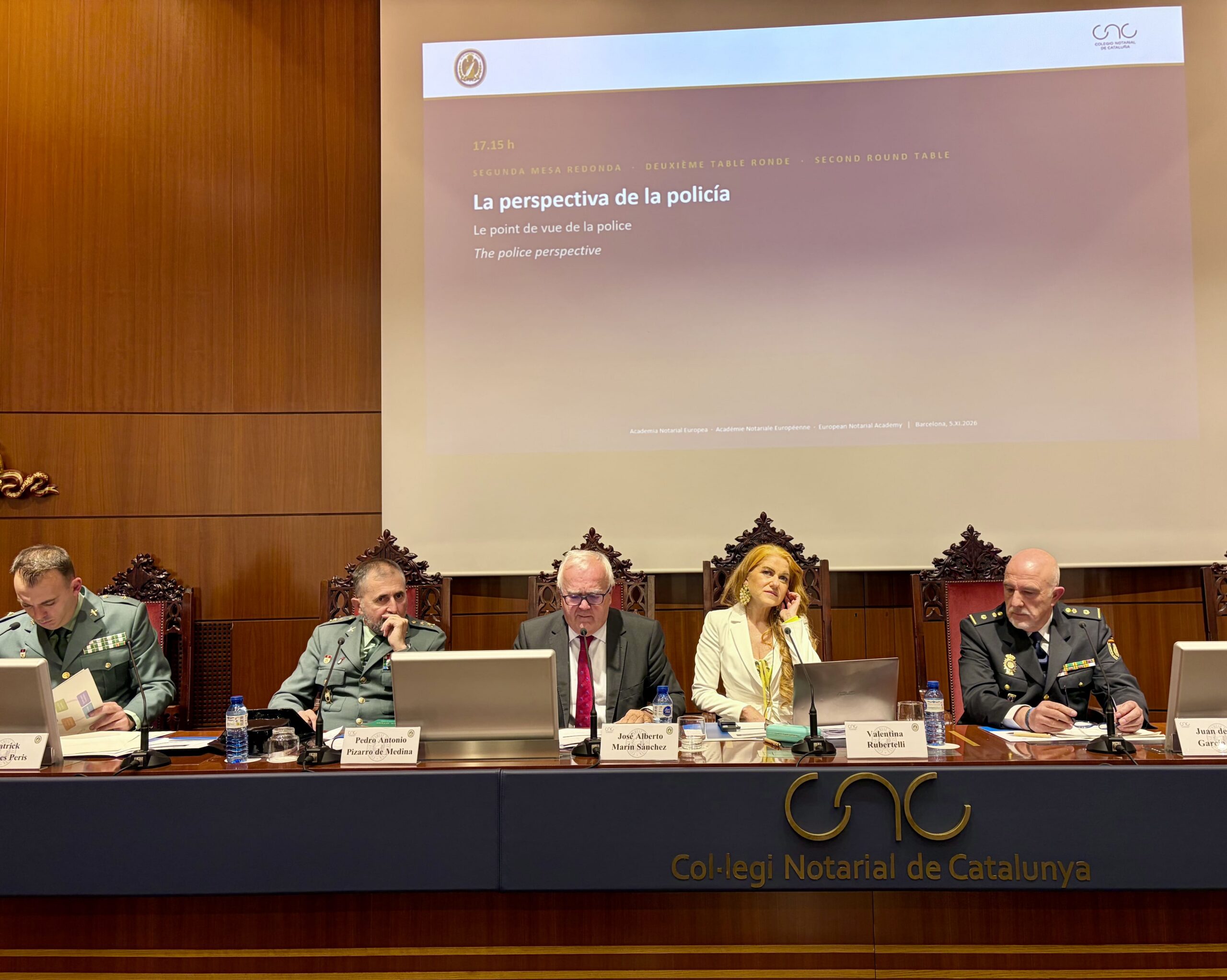
The law enforcement perspective:
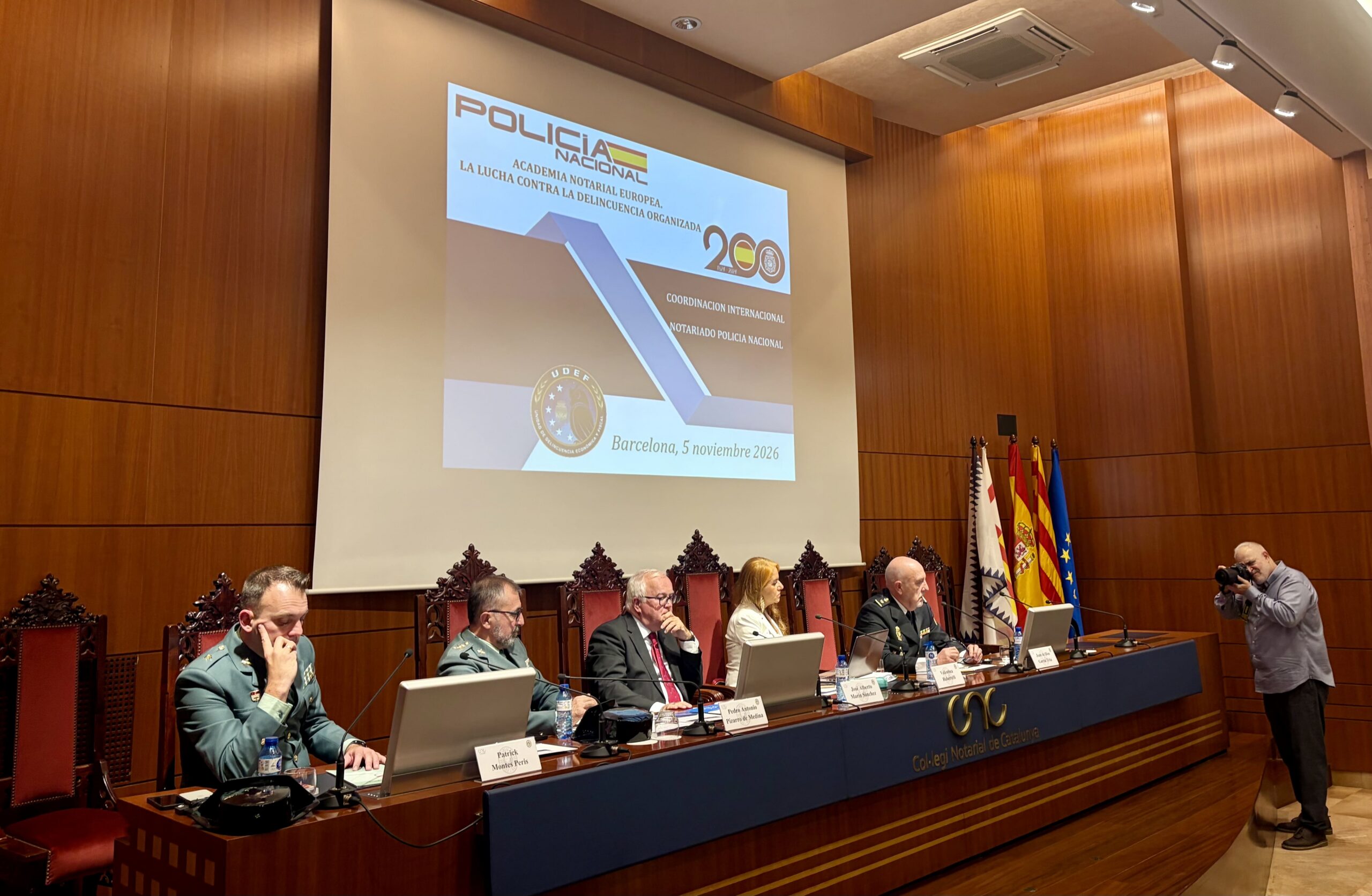
Next, Pedro Antonio Pizarro de Medina, General Chief of the Guardia Civil Zone in Catalonia, and Patrick Montes Peris, Commander, Head of the Judicial Police Unit of the Guardia Civil in Catalonia, spoke on preventing economic crime and the new international challenges.
Juan de Dios García Teba, Chief Inspector of the UDEF (Economic and Financial Crime Unit) of the National Police, addressed international coordination and data exchange between the Notariat and the National Police.
Preventive solutions from the notarial profession:
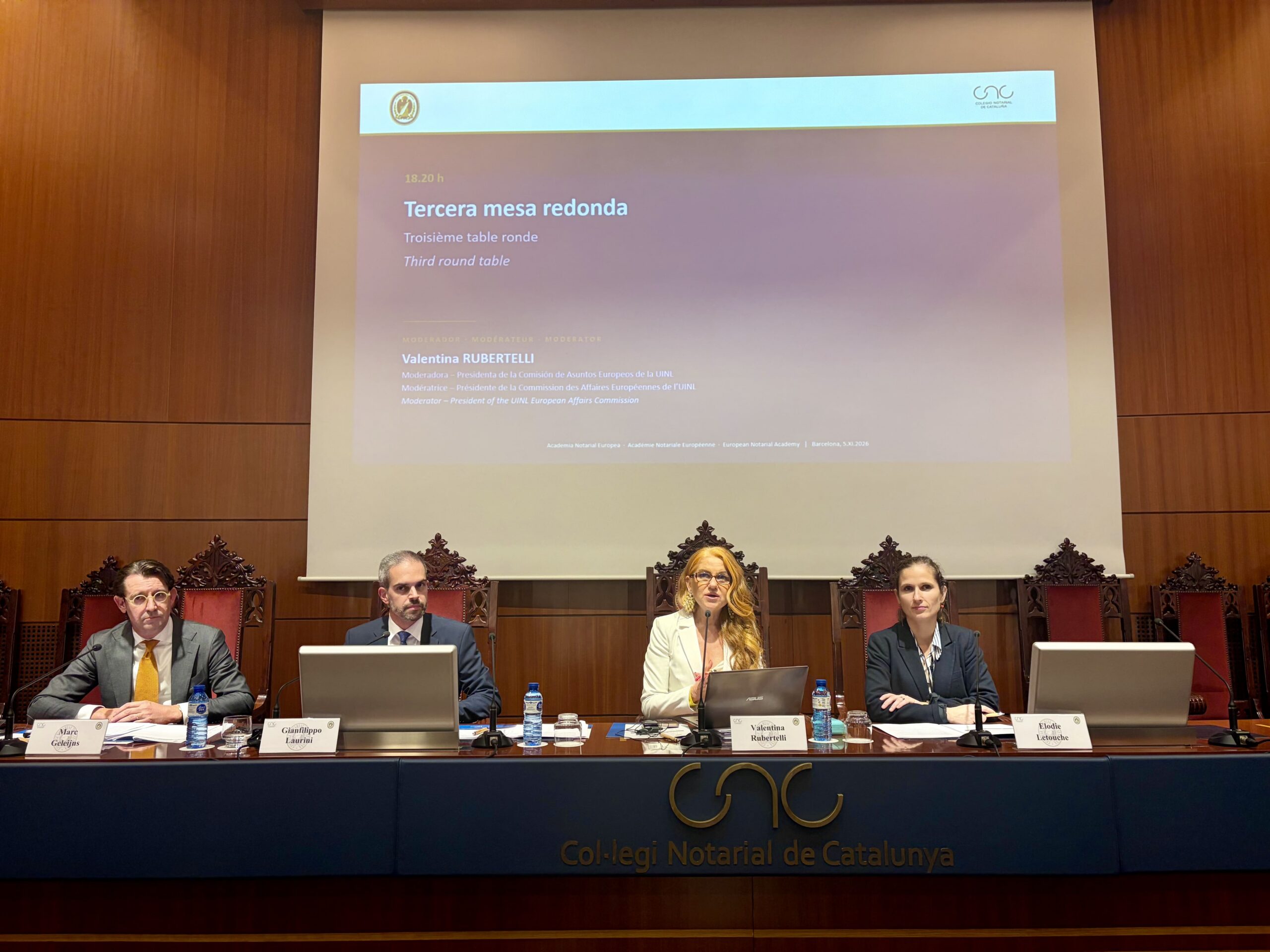
Gianfilippo Laurini (Italy) presented the project for a centralised anti-money laundering body within the Consiglio Nazionale del Notariato, inspired by the Spanish model.
Marc Geleijns (Netherlands) spoke on the requirement of notarial authentification for the transfer of shares in the Netherlands.
Finally, Elodie LETOUCHE (France) discussed the reinstatement in France of control over transfers of interests in predominantly real-estate companies (Law No. 2026-534 of 25 June 2026).
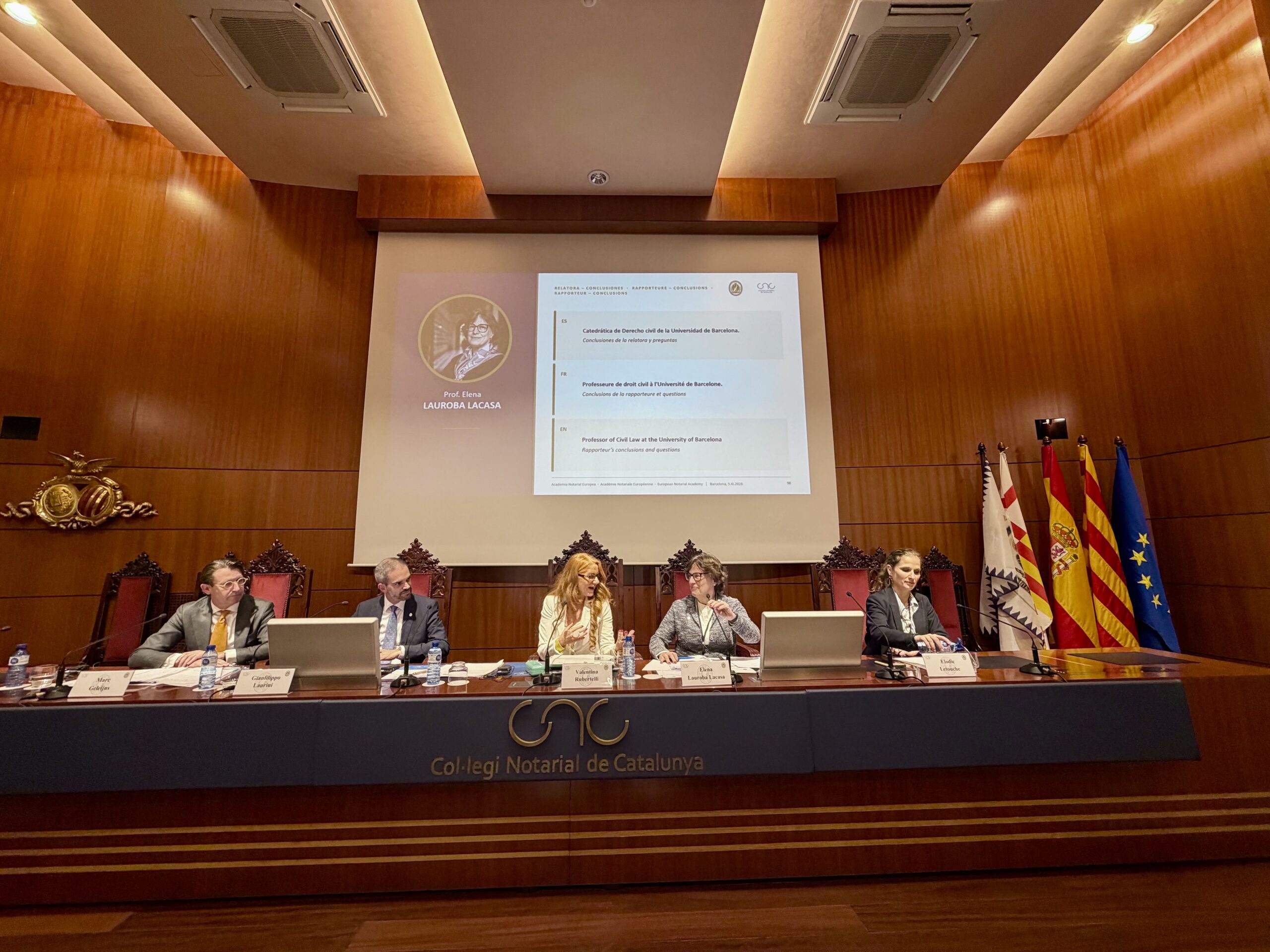
The conclusions were delivered by Elena Lauroba Lacasa, Full Professor of Civil Law at the University of Barcelona.
At the plenary session on Friday 6 November, progress reports were presented on the studies under way: lasting powers of attorney, digital death, the practice of the notarial profession in association, forced heirship and matrimonial property regimes, as well as the update of the publication Successions in Europe.
Our warmest thanks go to the Dean of the Colegio Notarial de Cataluña, José Alberto Marín Sánchez, for his warm welcome and the excellent organisation of the event.