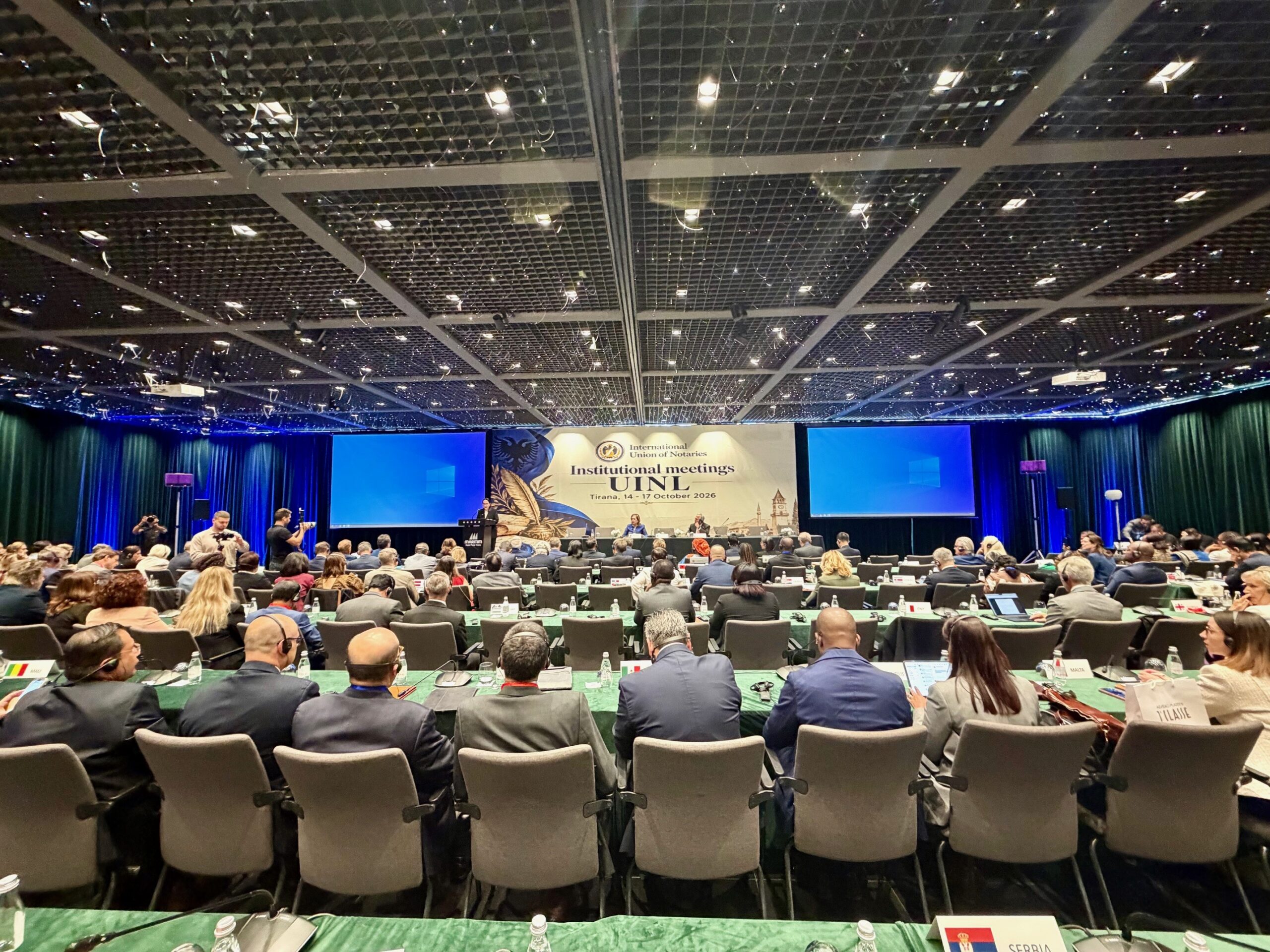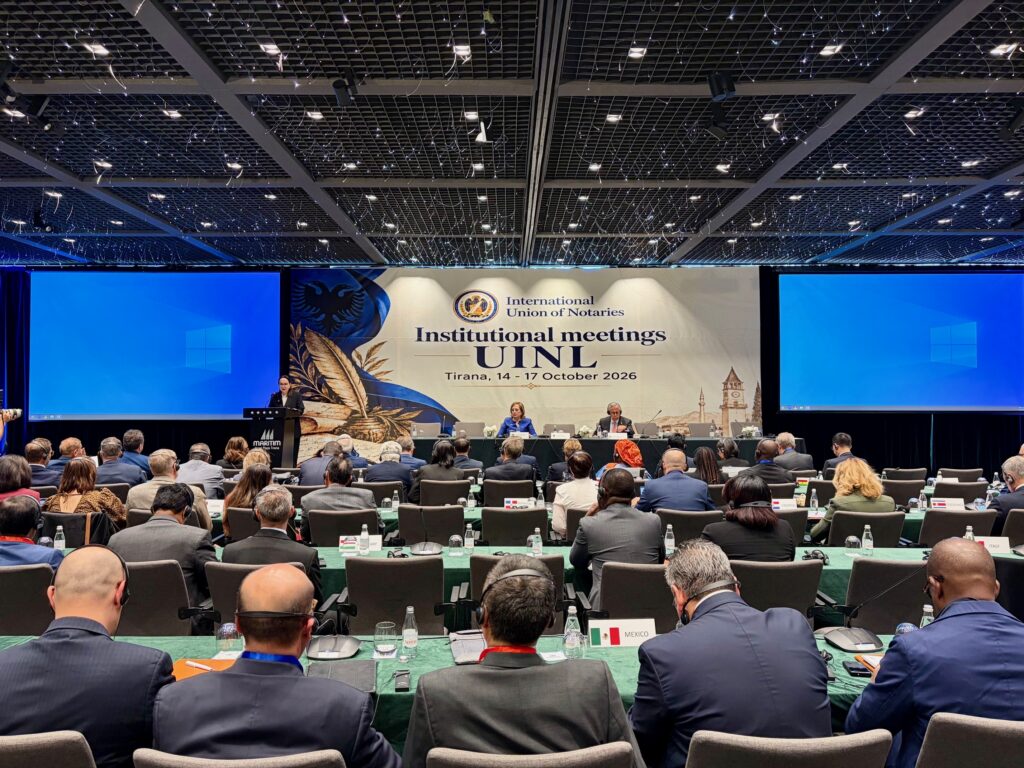
The International Union of Notaries (UINL) held its institutional meetings in Tirana, Albania, from 14 to 17 October 2026. These working days brought together notaries from around the world to address the major issues facing the profession.
A week of work
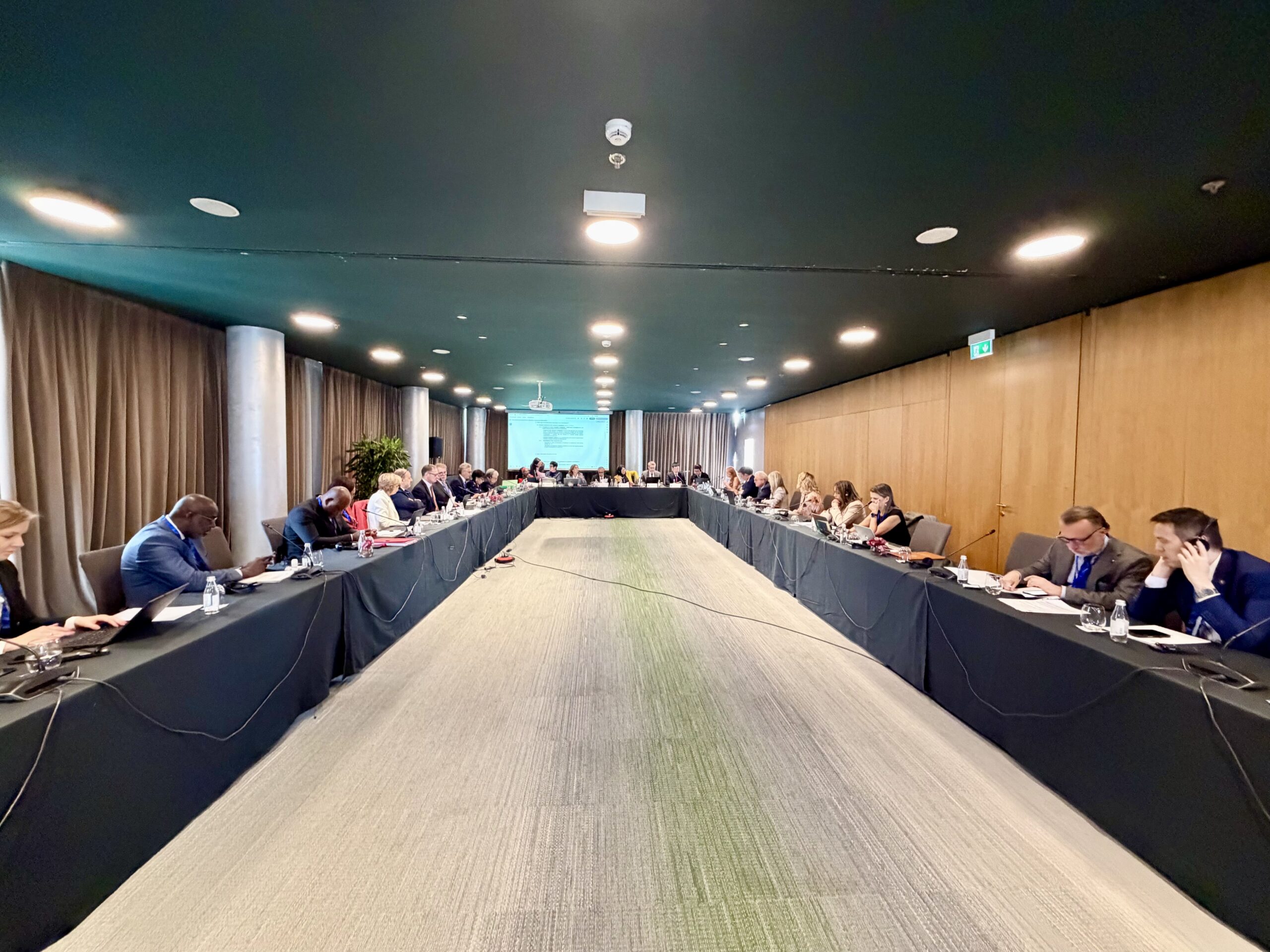
Proceedings opened on Wednesday 14 October with meetings of the UINL intercontinental commissions and working groups. These meetings provided an opportunity to review their activities and prepare the next stages of their work. The Steering Committee met on Thursday 15 October.
The joint meeting of the General Council and the General Meeting of Member Notariats took place on 16 and 17 October.
A high-level opening ceremony
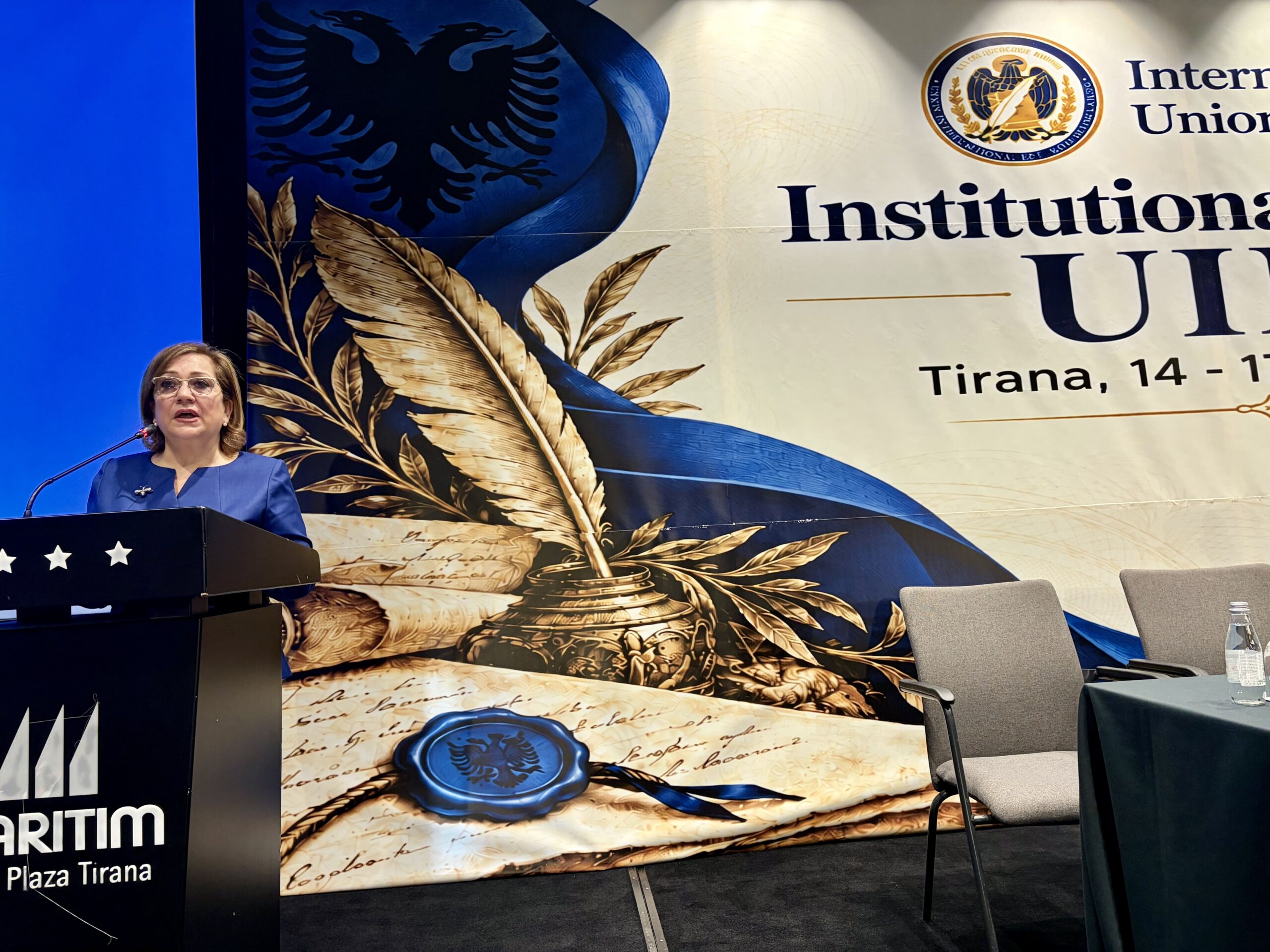
The opening session was chaired by Not. Mimoza SADUSHAJ, President of the National Association of Notaries of Albania. She was joined by the President of the UINL, Not. David FIGUEROA MÁRQUEZ, the Albanian Deputy Minister of Justice, Ms Elona HOXHA, and Mr Javier CREMADES, President of the World Jurist Association (WJA) and the World Law Foundation (WLF).
The UINL warmly thanks the Albanian Notariat for its outstanding hospitality and organisation, and in particular the UINL General Councillor, Not. Fatmir LACEIJ.
International round table: the Notariat in the age of artificial intelligence
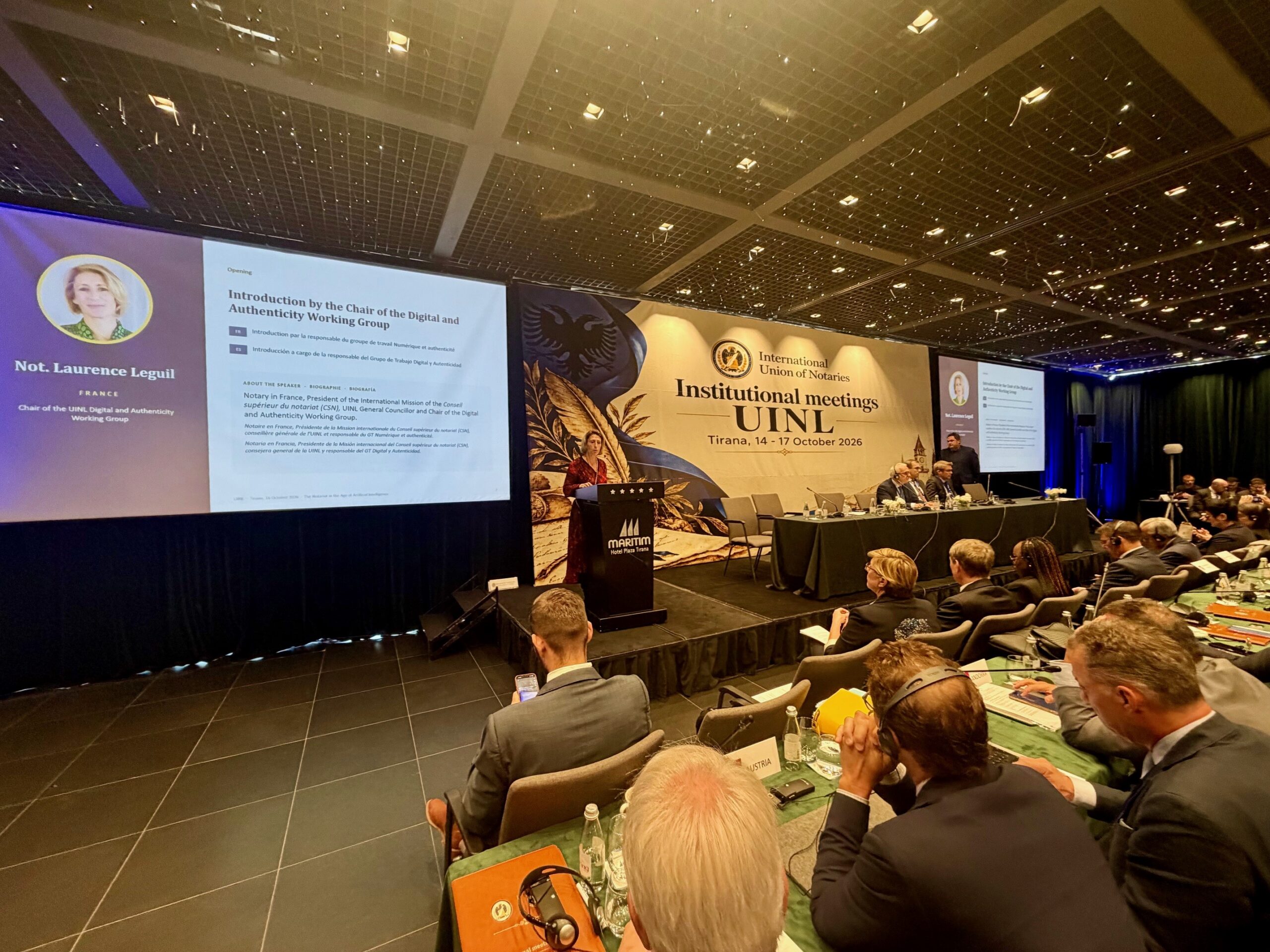
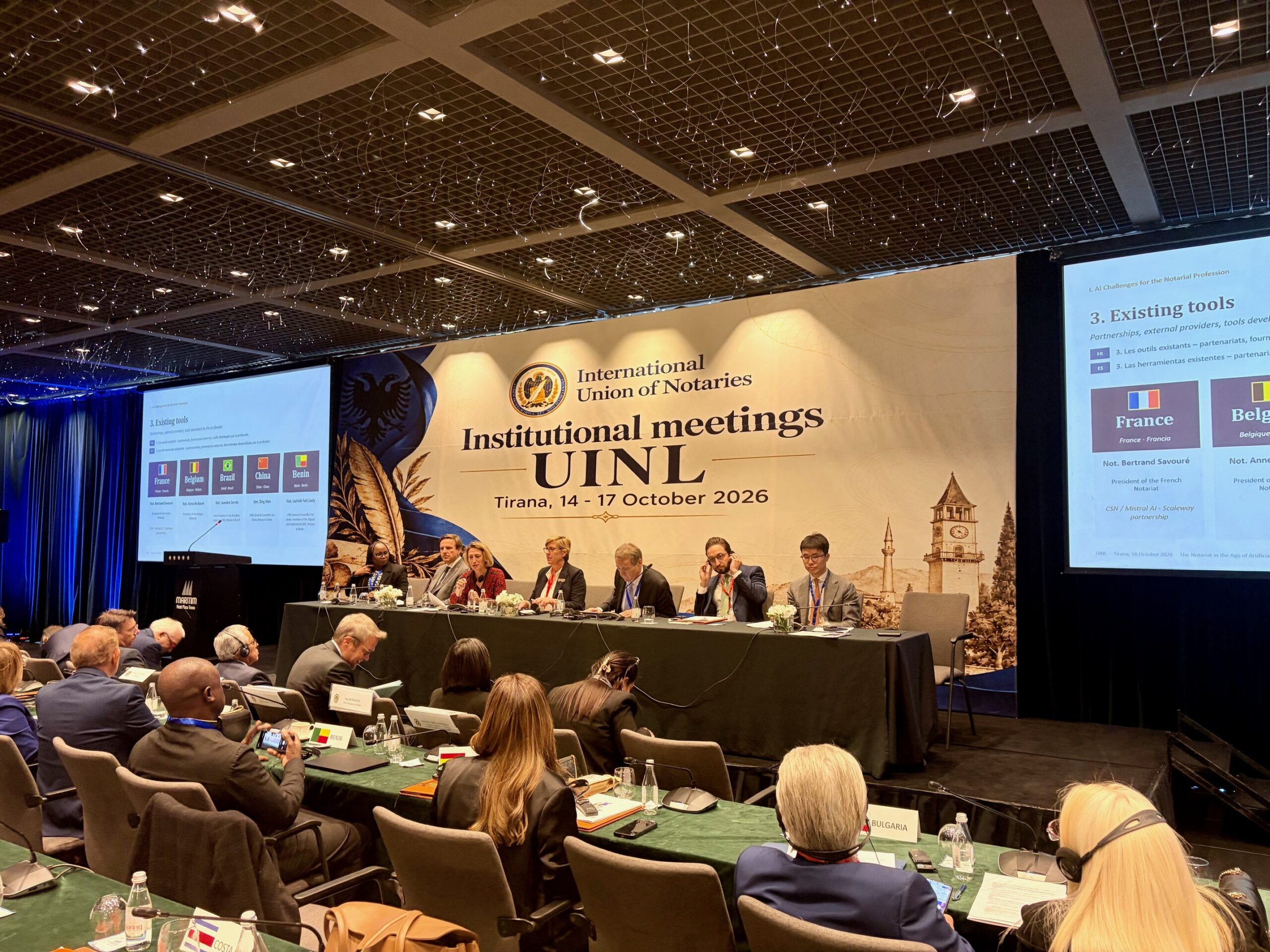
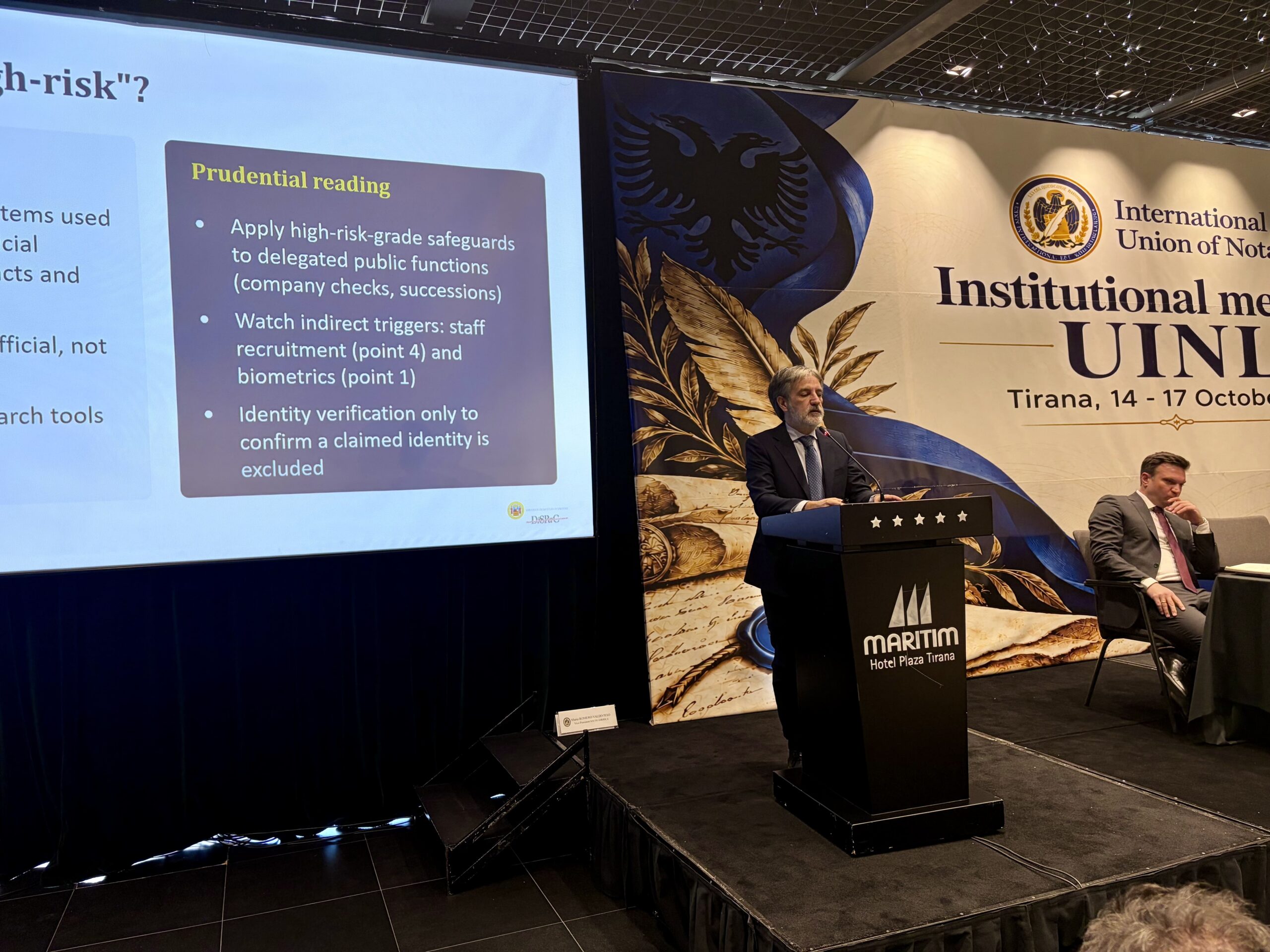
On Friday 16 October, at the request of the Albanian Notariat, the UINL held an international round table entitled “The Notariat in the Age of Artificial Intelligence: Finding the Balance between Efficiency, Responsibility and Independence”.
The round table, directed by French Notary Laurence Legui, Head of the Digital and Authenticity Working group of the UINL, brought together notaries and experts from Albania, Belgium, Benin, Brazil, China, France, Germany, Hungary and Italy. It explored the opportunities and challenges that AI presents for the notarial profession. Discussions focused in particular on:
- the benefits of AI in improving efficiency and automating repetitive tasks;
- the risks associated with AI, including bias, hallucinations and threats to professional independence;
- the applicable legal framework, with particular regard to professional secrecy, confidentiality, data protection and intellectual property;
- practical tools, best practices and guidelines to support the responsible use of AI in notarial practice.
Through international experience-sharing and collective reflection, the UINL reaffirms its commitment to supporting notaries in navigating technological change, while safeguarding the core values of the notarial function: independence, responsibility, legal certainty and trust.
The challenge is not simply to embrace innovation, but to ensure that AI remains a tool in the service of the notary and of citizens.